
What Are Catering Items? A Complete Guide to Essential Catering Supplies
8 min read
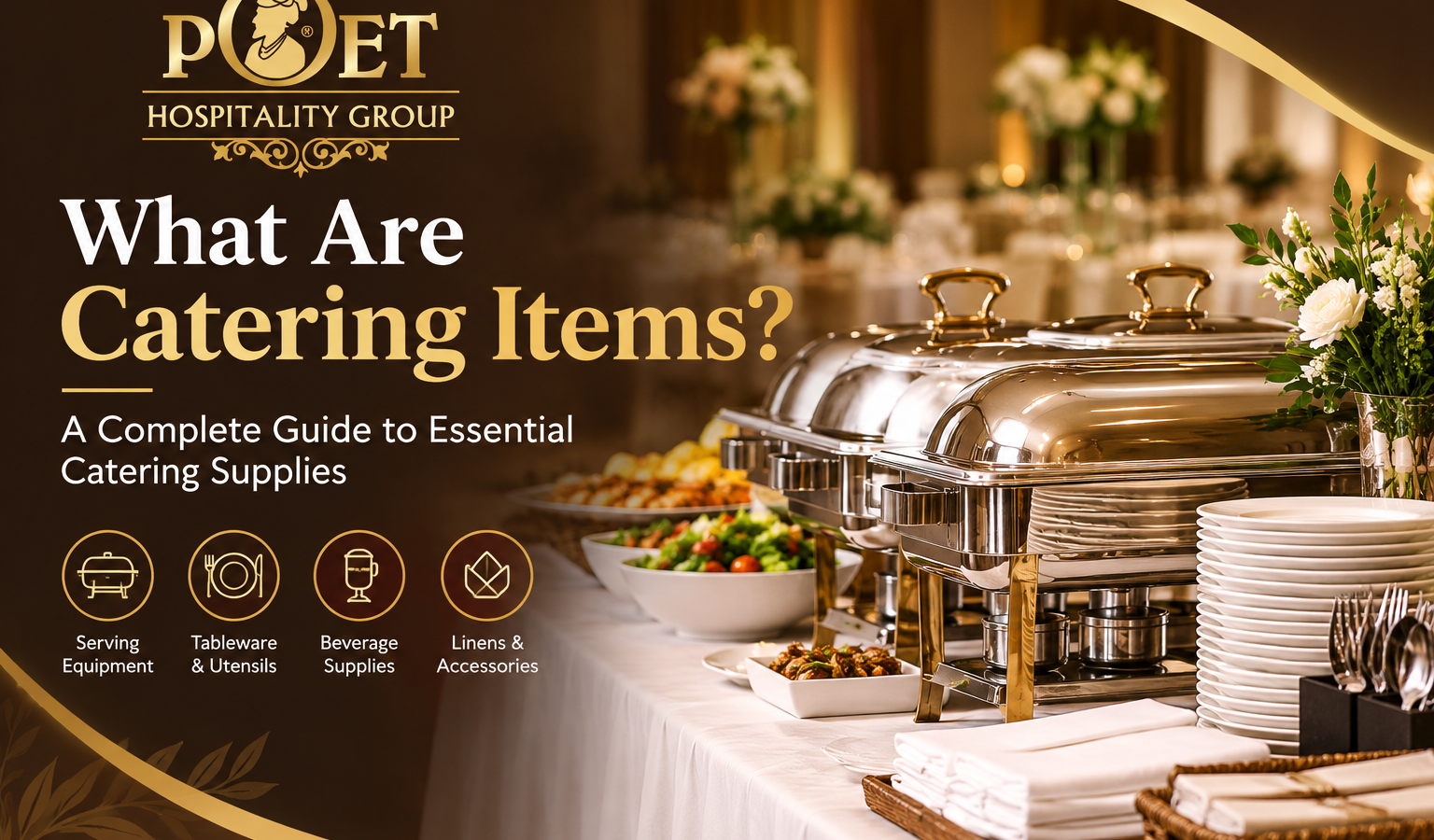
Catering plays an important role in making events, parties, weddings, corporate meetings, and family gatherings successful. Whether you are organizing a small birthday party or a large wedding reception, having the right supplies helps ensure that food is prepared, served, and presented properly. But what exactly are catering items, and why are they important?
Catering items are the tools, equipment, utensils, serving accessories, and supplies used to prepare, transport, display, and serve food and beverages at different events. These items help catering professionals maintain food quality, improve presentation, and provide guests with a comfortable dining experience.
In this guide, we will explore the different types of catering items, their uses, and how to choose the right supplies for your event or catering business.
What Are Catering Items?
Catering items include everything needed to manage food service efficiently, from kitchen preparation equipment to dining utensils and food presentation accessories. They are used by professional caterers, restaurants, hotels, event planners, and individuals hosting private gatherings.
Common examples include serving trays, chafing dishes, plates, glasses, cutlery, food warmers, beverage dispensers, and table decorations.
The type and quantity of supplies required depend on the size of the event, the menu, the service style, and the number of guests. For example, a wedding reception may require elegant serving dishes and decorative tableware, while an outdoor gathering may need disposable plates, portable food containers, and insulated beverage dispensers.
Types of Catering Items
Understanding the different categories of catering supplies makes it easier to prepare for any occasion. Each category serves a specific purpose in food preparation, presentation, and service.
1. Food Preparation Equipment
Food preparation equipment helps catering staff prepare ingredients and meals safely and efficiently. These items are especially important for large events where multiple dishes must be prepared within a limited time.
Common food preparation supplies include cutting boards, kitchen knives, mixing bowls, measuring cups, food processors, cooking pots, and pans.
Professional caterers often invest in durable, easy-to-clean equipment that can handle frequent use. Choosing appropriate preparation tools also helps maintain consistency when preparing large quantities of food.
2. Food Serving Equipment
Food serving equipment is used to present meals and make food accessible to guests. These catering items are essential for buffets, banquets, weddings, and corporate events.
Popular serving supplies include serving spoons, ladles, tongs, serving platters, salad bowls, and buffet trays.
For buffet-style service, chafing dishes are particularly useful because they help keep prepared food warm during service. Food covers and sneeze guards can also help protect food from contamination.
3. Plates, Bowls, and Cutlery
Plates, bowls, and cutlery are basic requirements for most catering events. The quantity and style depend on the menu, the number of guests, and the formality of the occasion.
Essential items include dinner plates, dessert plates, soup bowls, forks, knives, spoons, and serving utensils.
Porcelain and ceramic tableware are popular for formal events because they create an elegant appearance. Stainless steel cutlery is valued for its durability, while disposable alternatives can be practical for casual outdoor gatherings.
When selecting these supplies, consider both appearance and functionality to ensure they complement the event’s overall setup.
4. Food Storage and Transportation Supplies
Food storage and transportation equipment helps caterers move meals from the kitchen to the event location while maintaining appropriate food safety conditions.
Examples include insulated food carriers, storage containers, food-grade boxes, coolers, thermal bags, and airtight containers.
These supplies are particularly useful for off-site catering, outdoor functions, and events held at venues without fully equipped kitchens.
Temperature-controlled equipment is important for transporting hot and cold foods safely. Caterers should follow applicable food safety guidelines and avoid leaving perishable food at unsafe temperatures for extended periods.
5. Beverage Service Equipment
Beverage service equipment helps caterers serve drinks conveniently and maintain an organized beverage station.
Common items include water pitchers, beverage dispensers, coffee urns, tea service sets, glassware, cups, ice buckets, and insulated drink containers.
For weddings and formal dinners, elegant glassware can improve the presentation of the beverage service. For conferences and casual events, easy-to-use dispensers and cups may be more practical.
The selection should reflect the drinks being served, the expected number of guests, and the overall event style.
6. Tableware and Presentation Accessories
Food presentation contributes to the overall dining experience. Tableware and presentation accessories help create a coordinated and attractive setting.
Examples include tablecloths, napkins, placemats, table runners, serving stands, display risers, and decorative trays.
For formal occasions, matching table linens and stylish serving accessories can create a sophisticated atmosphere. For casual gatherings, simple and functional designs may be more appropriate.
Good presentation does not always require expensive supplies. Coordinated colors, clean table settings, and organized food displays can make a noticeable difference.
7. Disposable Catering Supplies
Disposable supplies are commonly used at outdoor events, food festivals, takeaway functions, and large gatherings where quick cleanup is important.
These items include paper plates, disposable cups, napkins, food containers, wooden cutlery, and takeaway boxes.
Businesses can consider recyclable, compostable, or reusable alternatives where suitable. The best choice depends on local waste-management facilities, budget, food requirements, and environmental considerations.
Using disposable supplies can simplify cleanup, but caterers should still ensure that food is served hygienically and that waste is managed responsibly.
Why Are Catering Items Important?
Catering supplies are essential for delivering efficient and organized food service. Having the right equipment helps catering teams prepare meals, serve guests, and manage events with fewer interruptions.
Improved food presentation: Appropriate serving dishes, tableware, and display equipment make food more appealing and help create a positive impression.
Better food safety: Suitable storage containers, food covers, and temperature-control equipment help protect food when used correctly.
Greater efficiency: Well-organized equipment allows staff to prepare and serve meals more efficiently, particularly during busy events.
Enhanced guest experience: Clean utensils, suitable plates, accessible beverage stations, and comfortable table settings help guests enjoy their meals.
Reduced operational difficulties: Durable, appropriate supplies can simplify food preparation, transportation, and cleanup.
How to Choose the Right Catering Items
Choosing the right supplies requires careful consideration of the event’s needs. Before purchasing or renting equipment, evaluate the following factors.
Consider the Type of Event
Different occasions require different supplies. A wedding reception may need formal tableware and elegant serving equipment, while a business conference may require coffee stations, water dispensers, and convenient meal containers.
Understanding the event’s purpose helps you select practical and suitable items.
Calculate the Number of Guests
Estimate the number of attendees before deciding how much equipment you need. Make sure there are enough plates, glasses, utensils, and serving accessories for the expected guest count.
It is also sensible to keep a small reserve of essential items to accommodate unexpected guests or replacements.
Prioritize Quality and Durability
Professional catering equipment is often used repeatedly, so durability matters. Stainless steel, commercial-grade food containers, and sturdy serving trays can be worthwhile investments for businesses that cater regularly.
For occasional events, renting specialized equipment may be more cost-effective than purchasing it.
Focus on Hygiene and Food Safety
Choose food-contact equipment that is suitable for its intended use and easy to clean. Follow manufacturer instructions for washing, sanitizing, storage, and temperature control.
Food preparation areas and serving equipment should be maintained properly to reduce contamination risks.
Set a Realistic Budget
Your budget should cover essential equipment first, followed by decorative or specialized supplies. Compare purchasing and rental options, considering how frequently each item will be used.
A practical inventory system can also help prevent unnecessary purchases and make it easier to track supplies.
Essential Catering Items Checklist
Before an event, review your inventory to ensure that all necessary supplies are available.
- Food preparation tools, knives, and cutting boards
- Cooking pots, pans, and mixing bowls
- Serving trays, spoons, tongs, and ladles
- Chafing dishes and food warmers, where required
- Plates, bowls, glasses, and cutlery
- Food storage containers and insulated carriers
- Beverage dispensers, pitchers, and cups
- Tablecloths, napkins, and serving accessories
- Food covers and appropriate hygiene supplies
- Waste bins, cleaning materials, and disposal bags
The final checklist should be adjusted according to the menu, venue, service format, and number of guests.
Should You Buy or Rent Catering Items?
Buying or renting depends on how often you organize events and what equipment you require.
Purchasing makes sense for catering businesses that regularly use the same supplies. It provides greater control over inventory and availability, although storage, maintenance, and replacement costs must be considered.
Renting is often suitable for one-time celebrations, weddings, and occasional large functions. It allows event organizers to access specialized equipment without making a substantial upfront investment.
Many catering businesses use a combination of both approaches, purchasing everyday essentials and renting expensive or rarely used equipment.
Conclusion
Catering items are an essential part of successful food preparation and event management. From kitchen tools and serving equipment to tableware, beverage supplies, and food storage containers, every category contributes to a smooth and enjoyable dining experience.
Selecting the right supplies involves understanding the event requirements, estimating the number of guests, prioritizing hygiene, and balancing quality with budget. Whether you are planning a private gathering or operating a professional catering business, well-chosen catering items can improve efficiency, food presentation, and guest satisfaction.
By organizing your supplies in advance and maintaining a reliable inventory, you can prepare for different occasions with greater confidence and deliver a more professional catering service.
FAQs
Catering items are the equipment, utensils, and supplies used to prepare, store, transport, display, and serve food and beverages at events, parties, weddings, and corporate functions.
Common catering items include serving trays, chafing dishes, plates, bowls, cutlery, glasses, food storage containers, beverage dispensers, tablecloths, and napkins.
Catering items help improve food presentation, maintain hygiene, organize food service, and ensure guests can enjoy their meals comfortably.
Wedding catering typically requires dinner plates, cutlery, glassware, serving trays, chafing dishes, food warmers, beverage dispensers, table linens, and decorative serving accessories.
Essential buffet supplies include chafing dishes, serving spoons, tongs, food covers, display stands, plates, bowls, and beverage dispensers.