
What Are the 5 Stages of Event Management?
6 min read
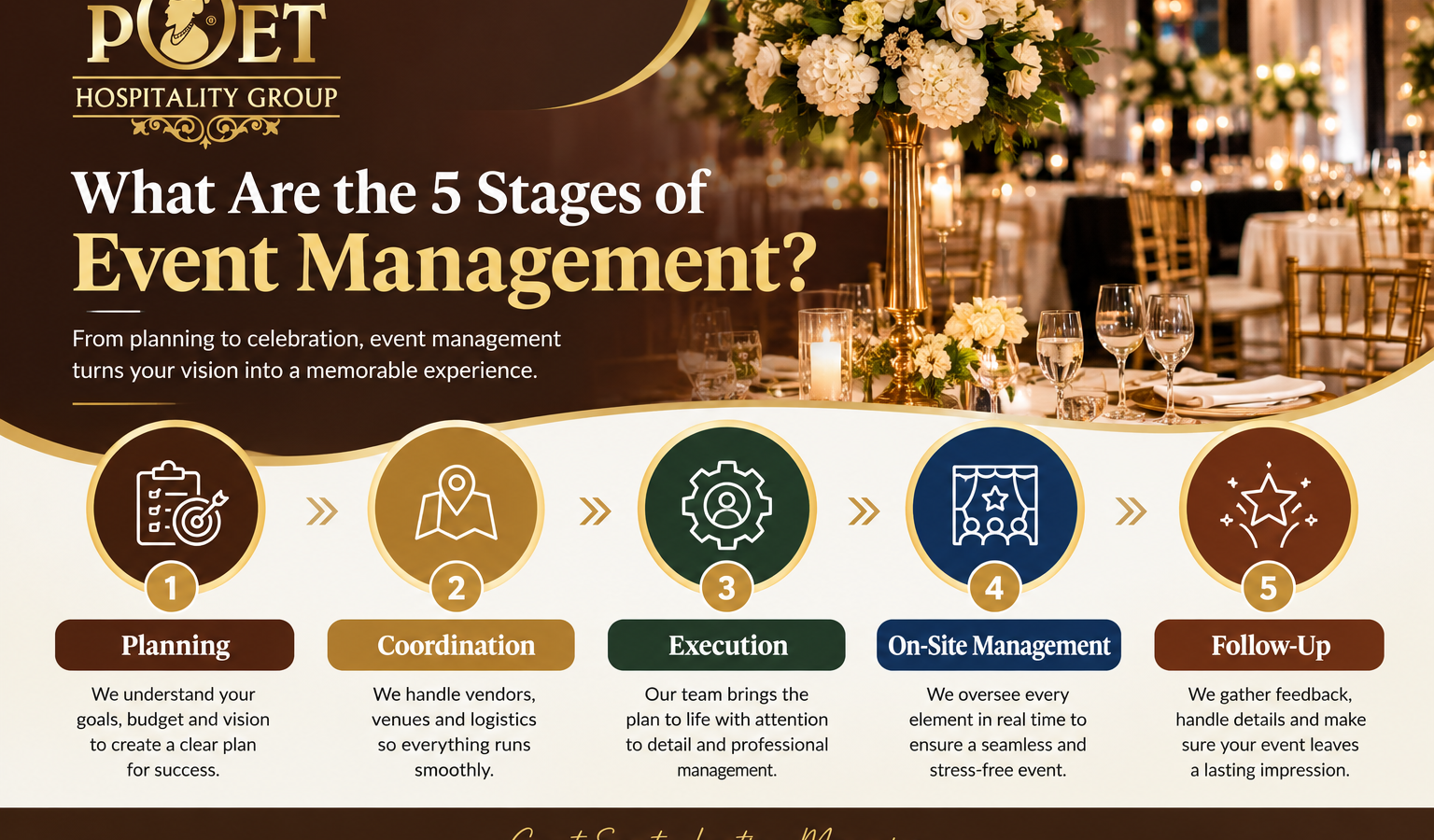
Event management involves planning, organizing, and executing events to ensure everything runs smoothly from start to finish. Whether it is a corporate conference, wedding, birthday celebration, product launch, or restaurant gathering, successful events require careful preparation and coordination.
Understanding the five stages of event management helps organizers manage budgets, communicate with vendors, create memorable experiences, and achieve their goals. Each stage has a specific purpose, and together they provide a structured approach to delivering a successful event.
1. Event Planning and Research
The first stage of event management is planning. This stage establishes the foundation for the entire event by defining its purpose, audience, budget, and expected outcomes.
Before making bookings or arranging services, organizers need to understand what the event is intended to achieve. For example, a corporate event may focus on networking and business growth, while a wedding may prioritize guest experience and celebration.
Important activities during this stage include:
- Defining event objectives: Establish clear goals and identify what success will look like.
- Identifying the target audience: Understand the number of guests, their preferences, and their expectations.
- Setting a budget: Estimate expenses for the venue, catering, decorations, entertainment, equipment, and staff.
- Selecting a date and venue: Choose a suitable date and location based on the event’s requirements.
- Conducting research: Explore suppliers, competitors, venue options, and current event trends.
A detailed plan helps organizers make informed decisions and avoid unnecessary expenses. It also provides a clear direction for the remaining stages.
2. Event Design and Organization
Once the initial plan is ready, the next stage focuses on designing the event and organizing all the necessary resources. This is where ideas become a practical event concept.
Event design includes creating the atmosphere, selecting decorations, planning seating arrangements, and deciding how guests will move through the venue. The design should reflect the event’s purpose and create an experience that attendees will remember.
For example, a luxury dining event may require elegant table settings, carefully designed lighting, premium food presentation, and attentive service. A business conference may need presentation screens, microphones, registration desks, and comfortable seating.
Key activities during this stage include:
- Choosing an event theme and visual style.
- Preparing a detailed schedule and timeline.
- Contacting and confirming vendors and suppliers.
- Arranging catering, entertainment, and technical equipment.
- Planning guest registration and invitations.
- Coordinating staff responsibilities and communication.
Strong organization ensures that everyone involved understands their duties and deadlines. It also helps prevent confusion when several suppliers and service providers are working together.
3. Event Promotion and Marketing
The third stage focuses on promoting the event and attracting the right audience. Even a well-planned event may struggle to achieve its objectives if people do not know about it.
Event promotion methods depend on the event type, audience, and available budget. A public exhibition may require broad advertising, while a private corporate gathering may rely on direct invitations and professional networks.
Common event marketing strategies include:
- Social media marketing: Promote the event through platforms such as Facebook, Instagram, LinkedIn, and TikTok.
- Email marketing: Send invitations, announcements, registration links, and event updates.
- Website promotion: Publish event details, schedules, ticket information, and registration forms.
- Content marketing: Share blog posts, photographs, videos, and other relevant content.
- Paid advertising: Use targeted campaigns to reach potential attendees.
- Partnerships: Collaborate with sponsors, influencers, businesses, or relevant organizations.
Organizers should communicate essential information clearly, including the event date, venue, schedule, registration process, and any applicable fees.
Tracking registrations, responses, and engagement can help determine whether promotional efforts are working. If interest is lower than expected, organizers can adjust their messaging or marketing channels before the event takes place.
4. Event Execution and Management
Event execution is the stage when all the planning and preparation come together. On the event day, organizers must coordinate staff, manage suppliers, assist guests, and ensure that activities follow the planned schedule.
This stage requires strong communication, quick decision-making, and attention to detail. Unexpected problems can occur, including technical failures, delayed deliveries, changes in attendance, or last-minute scheduling issues.
To manage the event effectively, organizers should:
- Arrive early to inspect the venue and equipment.
- Confirm that decorations, seating, catering, and technical arrangements are ready.
- Coordinate staff, suppliers, speakers, and entertainers.
- Manage guest arrivals, registration, and directions.
- Monitor the event schedule and resolve delays.
- Maintain safety procedures and emergency arrangements.
- Respond promptly to guest questions and unexpected issues.
For example, during a restaurant event, the team may need to coordinate food preparation, table service, entertainment, and guest requests simultaneously. Effective teamwork ensures that guests receive a consistent and enjoyable experience.
A designated event manager should oversee operations and maintain communication with the relevant teams. Having backup plans for common problems can also reduce disruption and help the event continue smoothly.
5. Event Evaluation and Follow-Up
The final stage of event management is evaluation. Although the event may be over, organizers still need to determine whether it achieved its objectives and identify opportunities for improvement.
Evaluation helps businesses understand what worked well, what caused difficulties, and how future events can deliver better results.
Important post-event activities include:
- Collecting feedback: Ask attendees, staff, sponsors, and vendors about their experiences.
- Reviewing the budget: Compare actual spending with the original budget.
- Measuring performance: Assess attendance, registrations, engagement, customer satisfaction, and other relevant goals.
- Following up with attendees: Send thank-you messages, photographs, certificates, or relevant resources.
- Reporting results: Prepare a summary of achievements, expenses, and challenges.
- Identifying improvements: Record lessons that can support future planning.
For business events, organizers may also measure leads generated, partnerships established, sales opportunities, or brand awareness. For social events, guest satisfaction and the overall experience may be more important indicators.
A post-event report creates a useful record for future projects. It allows organizers to build on successful practices instead of repeating the same mistakes.
Why Are the Five Stages of Event Management Important?
The five stages provide a clear structure for handling every aspect of an event. Without a systematic approach, organizers may overlook important tasks, exceed their budgets, or fail to communicate effectively with suppliers and attendees.
Following these stages offers several benefits:
Better budget control: Early planning helps allocate resources and reduce unnecessary spending.
Improved coordination: Clearly defined responsibilities help teams work together efficiently.
Stronger promotion: Targeted marketing can attract the right audience and increase attendance.
Better guest experiences: Organized operations help create a comfortable, engaging, and memorable event.
Continuous improvement: Post-event evaluation provides useful insights for future projects.
These benefits apply to events of different sizes, from small private gatherings to large conferences, exhibitions, weddings, and hospitality functions.
Conclusion
The five stages of event management are planning and research, event design and organization, promotion and marketing, event execution, and evaluation and follow-up. Each stage contributes to the overall success of an event by ensuring that objectives are clear, resources are organized, attendees are informed, and activities run efficiently.
By following these stages, event organizers can manage challenges, control costs, improve communication, and deliver experiences that meet their audience’s expectations. Careful planning combined with effective execution and ongoing evaluation creates a reliable foundation for successful events.
Frequently Asked Questions (FAQs)
The five stages of event management are planning and research, event design and organization, promotion and marketing, event execution, and evaluation and follow-up.
Event planning helps organizers define objectives, manage budgets, select suitable venues, coordinate suppliers, and prepare for potential challenges.
Every stage is important, but planning provides the foundation for success. Effective planning helps ensure that resources, schedules, and responsibilities are properly organized.
Event execution involves managing activities on the event day, coordinating staff and vendors, welcoming guests, following the schedule, and resolving unexpected issues.
Organizers evaluate success by reviewing attendee feedback, attendance numbers, budget performance, engagement, and whether the event achieved its original objectives.