
What Are the Four Main Stages of Managing an Event?
6 min read
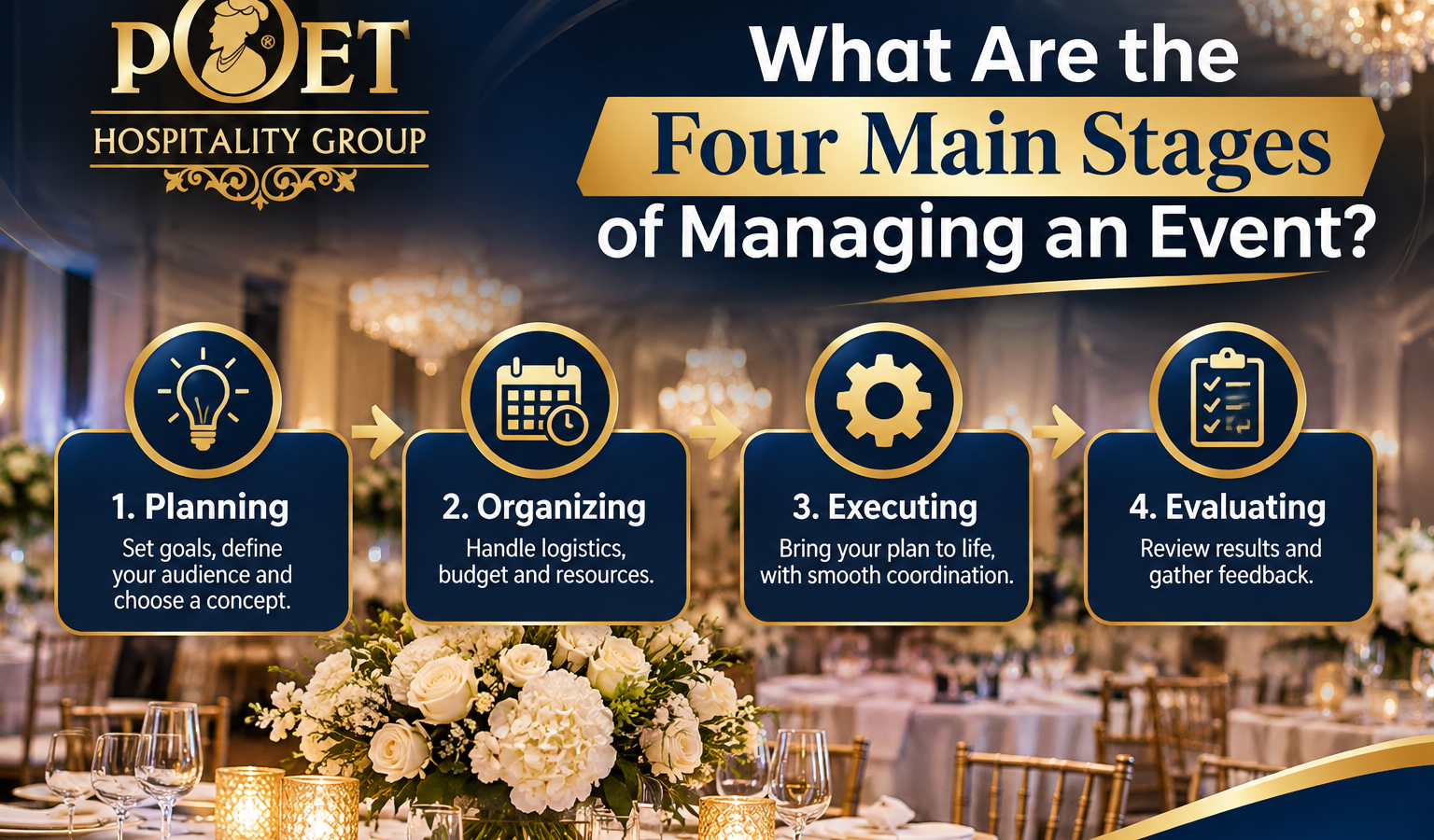
Event management involves several important steps that help turn an idea into a successful and memorable experience. Whether someone is organising a corporate conference, wedding, birthday celebration, business meeting, or charity event, proper planning and coordination are essential.
The four main stages of managing an event are event planning, event organisation, event execution, and event evaluation. Each stage has a specific purpose and contributes to the overall success of the event.
Understanding these stages helps event planners manage their time, budget, resources, and responsibilities more effectively.
1. Event Planning: Defining the Goals and Vision
The first stage of event management is planning. This is where the event idea takes shape, and the organiser determines what the event should achieve.
Before making any arrangements, it is important to establish the event’s purpose, target audience, and expected outcomes. A clear plan provides direction and helps prevent unnecessary expenses or confusion later.
Key Activities During Event Planning
Setting event objectives: Every event should have a clear purpose. A corporate conference may aim to introduce a new product, while a wedding focuses on celebrating a special occasion.
Identifying the target audience: Understanding the attendees helps organisers select the right venue, activities, entertainment, and overall event experience.
Creating a budget: Event planners need to estimate costs for venue rental, catering, decorations, equipment, transportation, marketing, and other services. A contingency budget should also be included for unexpected expenses.
Choosing the event date and location: The date and venue should match the event’s purpose, audience size, accessibility requirements, and budget.
Developing an event concept: The theme, atmosphere, and format should reflect the event’s objectives and create a consistent experience for attendees.
For example, when planning a corporate networking event, the organiser may choose a professional venue, arrange seating for networking, and create a programme that encourages interaction between guests.
A detailed event plan helps everyone understand the goals and expectations from the beginning.
2. Event Organisation: Preparing Everything for the Event
Once the planning stage is complete, the next step is organisation. This stage focuses on turning the event plan into practical arrangements.
Event organisers coordinate with suppliers, vendors, staff, and other stakeholders to ensure that everything is prepared before the event begins.
Key Activities During Event Organisation
Booking the venue: The selected venue must be confirmed, including its availability, capacity, facilities, and rental conditions.
Coordinating with vendors: Catering companies, decorators, photographers, entertainers, equipment suppliers, and other service providers need to be contacted and confirmed.
Managing invitations and registrations: Organisers prepare invitations, registration forms, guest lists, and attendance records.
Arranging logistics: Transportation, accommodation, parking, seating arrangements, lighting, sound systems, and equipment setup must be organised.
Creating an event schedule: A detailed timeline should include arrival times, registration, speeches, presentations, entertainment, meals, and other activities.
Assigning responsibilities: Every team member should understand their duties. For example, one person may handle guest registration, while another manages technical equipment.
Good organisation ensures that all essential arrangements are completed on time.
It also helps reduce the risk of last-minute problems and allows the event team to work together efficiently.
3. Event Execution: Bringing the Event to Life
Event execution is the stage when the event takes place. All the planning and preparation are put into action, and the event management team works to deliver the expected experience.
This stage requires effective communication, teamwork, leadership, and quick decision-making.
Even a well-planned event can face unexpected challenges, so organisers must remain flexible and prepared to respond.
Key Activities During Event Execution
Managing guest arrivals: Registration desks, welcome teams, and check-in procedures help attendees enter the event smoothly.
Supervising the event schedule: Organisers monitor the programme to ensure that activities begin and finish at the planned times.
Coordinating staff and vendors: Event managers communicate with suppliers, catering teams, security personnel, and technical staff throughout the event.
Managing technical equipment: Sound systems, microphones, lighting, screens, and presentation equipment must operate properly.
Handling unexpected problems: Delays, equipment failures, missing supplies, or changes in attendance may require immediate solutions.
Ensuring guest satisfaction: Organisers should make sure that attendees feel comfortable, receive necessary information, and have a positive experience.
For example, if a speaker arrives late at a business conference, the event manager may adjust the schedule by moving another presentation forward.
The goal of event execution is to deliver a smooth, organised, and enjoyable event while maintaining the original objectives.
4. Event Evaluation: Measuring Success and Learning
The final stage of event management is evaluation. This stage takes place after the event and focuses on measuring its performance.
Evaluation helps organisers understand what worked well, identify areas for improvement, and determine whether the event achieved its objectives.
It also provides valuable information for planning future events.
Key Activities During Event Evaluation
Collecting attendee feedback: Surveys, feedback forms, and conversations with guests can reveal how attendees felt about the event.
Reviewing the budget: Organisers compare actual expenses with the original budget to identify savings, unexpected costs, or financial issues.
Measuring event performance: Attendance numbers, registration rates, audience engagement, social media activity, and other relevant indicators can help measure success.
Evaluating suppliers and staff: The event team reviews the performance of vendors, service providers, and staff members.
Preparing an event report: A final report summarises the event’s outcomes, financial performance, achievements, challenges, and recommendations.
Following up with attendees: Thank-you messages, photographs, presentations, and other relevant materials can be shared after the event.
For example, if a conference receives positive feedback about its speakers but negative feedback about registration delays, organisers can improve the check-in process for the next event.
Evaluation turns the experience of one event into valuable knowledge for future projects.
Why Are the Four Stages of Event Management Important?
The four stages work together to create a structured approach to event management.
Each stage supports the next, helping organisers maintain control over the entire process.
The main benefits include:
- Better planning: Clear objectives and budgets reduce confusion.
- Improved coordination: Staff and suppliers understand their responsibilities.
- Efficient resource management: Time, money, and equipment are used effectively.
- Reduced risks: Potential problems can be identified and managed.
- Better attendee experience: Organised events provide a more comfortable and enjoyable environment.
- Continuous improvement: Evaluation helps organisers improve future events.
Skipping any of these stages can create unnecessary challenges. For example, poor planning may lead to budget problems, while a lack of evaluation can prevent organisers from learning from previous experiences.
Conclusion
The four main stages of managing an event are planning, organisation, execution, and evaluation. Each stage plays an important role in delivering a successful event.
Planning establishes the event’s objectives and budget. Organisation prepares the resources, suppliers, and logistics. Execution brings the event to life, while evaluation measures its success and identifies opportunities for improvement.
By following these four stages, event managers can create well-organised experiences that meet their objectives, satisfy attendees, and make effective use of available resources.
Whether managing a small private gathering or a large corporate event, a structured approach helps ensure that every detail is handled professionally and efficiently.
Frequently Asked Questions
What are the four main stages of event management?
The four main stages are event planning, event organisation, event execution, and event evaluation.
What is the most important stage of event management?
Planning is often considered one of the most important stages because it establishes the event’s objectives, budget, schedule, and overall direction.
What happens during the event execution stage?
During execution, the event takes place. Organisers manage guests, coordinate staff and suppliers, monitor the schedule, and handle unexpected issues.
Why is event evaluation important?
Event evaluation helps organisers measure success, collect feedback, review expenses, and identify improvements for future events.
How can event managers ensure a successful event?
Event managers can improve event success by setting clear objectives, preparing a realistic budget, coordinating suppliers, maintaining effective communication, and evaluating the event afterward.