
What Is the Cheapest Type of Catering?
8 min read
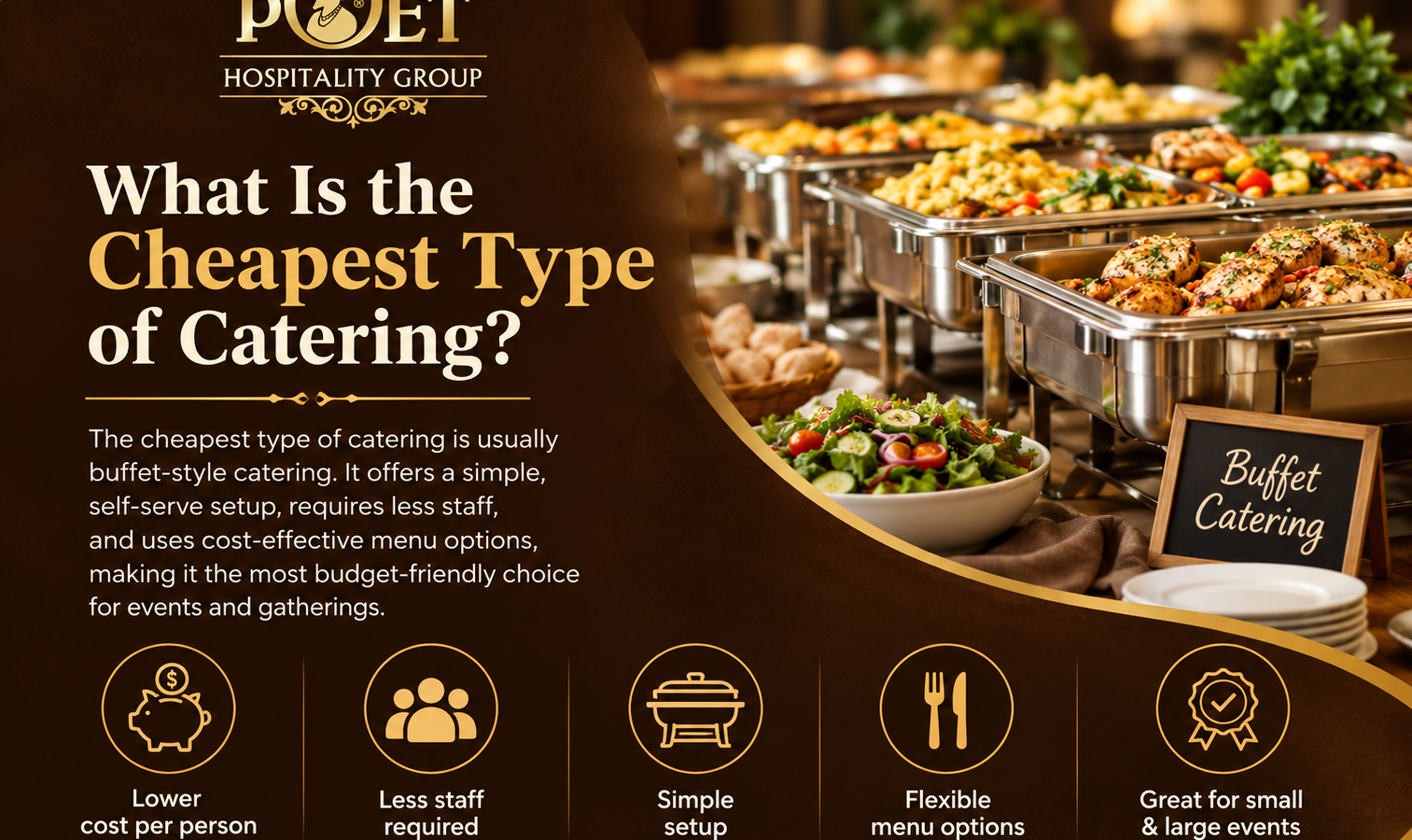
Planning an event on a budget does not mean you have to compromise on food quality or guest satisfaction. Whether you are organising a corporate meeting, wedding, birthday party, family gathering, or outdoor event, choosing the right catering style can help you serve delicious food while keeping costs under control. But what is the cheapest type of catering?
Generally, buffet catering, drop-off catering, and self-service food stations are among the most affordable catering options. The best choice depends on your guest count, menu, venue, and the level of service you require. Understanding the differences between catering styles can help you make a practical decision for your next event.
1. Buffet Catering
Buffet catering is one of the most popular budget-friendly options for events with a large number of guests. Instead of having individual meals served to every person by waitstaff, food is arranged on tables where guests can serve themselves.
This approach can reduce staffing costs and make it easier to serve a large group efficiently. Buffet catering also allows organisers to offer several dishes without preparing a separate plated meal for every guest.
For example, a buffet menu might include rice, chicken, vegetables, salad, bread, and dessert. Selecting seasonal ingredients and a limited number of dishes can make the overall package more affordable.
Buffet catering works well for corporate events, family celebrations, weddings, and community gatherings. However, the final cost depends on the menu, food quantities, equipment, and service requirements.
2. Drop-Off Catering
Drop-off catering is often one of the cheapest types of catering because it focuses on food preparation and delivery rather than full-service event management.
With this option, a catering company prepares the food and delivers it to your venue in suitable containers. Your team or guests can then arrange the food and serve themselves, depending on the setup.
Drop-off catering is particularly suitable for office lunches, business meetings, training sessions, birthday parties, and informal gatherings.
You can keep costs down by ordering a simple menu, choosing easy-to-serve dishes, and confirming the number of guests before placing your order. It is also important to check whether delivery charges, serving utensils, disposable plates, and food-warming equipment are included.
For businesses that need reliable food service without paying for a full catering team, drop-off catering can be a practical solution.
3. Self-Service Catering
Self-service catering allows guests to collect their own food from designated serving stations. It is similar to buffet catering but can also include individual food stations, snack tables, and simple meal arrangements.
This style can reduce the need for additional service staff and works well for casual events where guests are comfortable helping themselves.
Popular choices include sandwiches, wraps, pasta, rice dishes, salads, snacks, and desserts. Offering a small selection of filling dishes can help control food costs while ensuring guests have enough to eat.
Self-service catering is a good choice for informal corporate gatherings, workshops, school events, and private celebrations. However, organisers should still provide appropriate serving equipment and maintain safe food temperatures.
4. Finger Food and Light Refreshments
If your event does not require a complete meal, finger food and light refreshments can be an economical catering option.
This style typically includes small snacks and easy-to-eat items such as sandwiches, pastries, mini wraps, biscuits, fruit, and beverages. It is especially suitable for short meetings, networking sessions, product launches, and afternoon gatherings.
The key to saving money is matching the menu to the event schedule. For a short meeting, refreshments may be sufficient. For an event that overlaps with lunch or dinner, guests may expect a more substantial meal.
Providing appropriately sized portions and a carefully selected menu helps avoid unnecessary spending and food waste.
5. Potluck Catering
Potluck catering is one of the lowest-cost options when the event format allows guests to contribute food. Each participant brings a dish to share, reducing the amount the organiser needs to purchase from a catering company.
This approach is suitable for informal family gatherings, community events, and small social occasions. It can also introduce variety because different guests contribute different dishes.
However, potluck catering may not be appropriate for formal corporate functions, weddings, or events where consistent food quality and professional presentation are essential.
Organisers should also coordinate contributions, identify common allergens, and arrange proper storage and serving facilities.
6. Food Stations for Budget-Friendly Events
Food stations offer guests different food choices from designated serving areas. Although elaborate food stations can be expensive, a simple setup with one or two options can be affordable.
For example, an event organiser might choose a pasta station, sandwich station, or rice-based meal station instead of offering an extensive menu.
Limiting the number of stations helps control ingredient, equipment, and staffing costs. This approach is suitable for casual business events, birthday parties, and social gatherings.
For larger events, discuss portion sizes and replenishment arrangements with your caterer before finalising the package.
Which Type of Catering Is the Cheapest?
The cheapest option depends on your event requirements. Here is a general comparison of common catering styles.
| Catering Type | Potential Cost Level | Best For |
| Potluck catering | Very low | Informal gatherings |
| Drop-off catering | Low | Office lunches and small events |
| Buffet catering | Low to moderate | Large gatherings and celebrations |
| Finger food catering | Low to moderate | Meetings and short events |
| Self-service catering | Low to moderate | Casual parties and workshops |
| Full-service plated catering | Moderate to high | Formal dinners and weddings |
These cost levels are general guidelines rather than fixed prices. Location, guest count, menu ingredients, equipment, and staffing can significantly affect the final quote.
How to Reduce Catering Costs
Choosing an affordable catering style is only the first step. A few practical decisions can help you stay within your budget.
Set a Clear Budget
Decide how much you can spend on food and service before contacting catering companies. Calculate your approximate budget per guest and ask providers to recommend packages that fit your requirements.
Choose a Simple Menu
A smaller menu can reduce ingredient costs, preparation time, and food waste. Select a few complementary dishes rather than offering too many choices.
Confirm the Guest Count
An accurate guest count helps the catering company estimate food quantities and avoid unnecessary spending. Confirm attendance as early as possible and discuss arrangements for last-minute changes.
Select Seasonal Ingredients
Seasonal ingredients are often more economical and can provide freshness and variety. Ask your caterer about suitable alternatives if a particular ingredient increases the price.
Consider Delivery-Only Services
If your venue has enough space and facilities for serving food, consider drop-off catering instead of paying for a complete service team.
Compare Catering Packages
Request itemised quotes from different catering providers. Compare food portions, delivery, equipment, staffing, taxes, and any additional charges rather than choosing solely on the advertised price.
Is Cheap Catering Suitable for Corporate Events?
Yes. Affordable catering can work very well for corporate meetings, staff lunches, workshops, conferences, and networking events. The key is choosing a catering style that matches the occasion.
For a short business meeting, light refreshments may be enough. For an employee lunch, drop-off or buffet catering may provide better value. For a formal client dinner, professional service and presentation may be worth the additional investment.
A reliable catering company can help businesses balance food quality, convenience, presentation, and budget.
How to Choose the Right Catering Service
Before booking a catering provider, consider the type of event, number of guests, venue facilities, dietary requirements, and available budget. Ask about menu customisation, delivery arrangements, food safety, serving equipment, and cancellation policies.
It is also helpful to review previous customer feedback and request a detailed quotation. These steps make it easier to compare providers and avoid unexpected costs.
Professional event catering services can offer flexible packages for different occasions, from simple office lunches to large corporate gatherings and private celebrations.
Frequently Asked Questions
Buffet catering and drop-off catering are often cost-effective choices for large groups. Buffet service allows guests to serve themselves, while drop-off catering can reduce staffing costs.
Buffet catering is often cheaper because it may require fewer servers and less individual plating. However, the total cost depends on the menu, food quantities, equipment, and staffing arrangements.
Rice dishes, pasta, seasonal vegetables, sandwiches, and other filling foods can be economical choices. The most suitable menu depends on local ingredient prices, dietary needs, and the type of event.
Start by setting a total budget, confirming the guest count, and selecting a simple menu. Request quotes for drop-off and buffet catering, compare what each package includes, and avoid ordering more food than necessary.
Yes. Drop-off catering is convenient for office meetings, training sessions, staff lunches, and business gatherings because food is delivered ready for serving without requiring a full-service catering team.
Not necessarily. A well-planned, limited menu using fresh ingredients can provide excellent value. Compare food quality, portion sizes, service standards, and customer reviews before making a decision.
Final Thoughts
The cheapest type of catering is usually the option that provides the right amount of food and service without unnecessary extras. Potluck catering can be the least expensive for informal gatherings, while drop-off catering and buffet catering are practical choices for many private and corporate events.
By planning your menu carefully, confirming your guest count, and comparing catering packages, you can create a successful event without exceeding your budget. Choose a catering service that understands your requirements and offers a suitable balance of affordability, quality, and convenience.